Recently in Riverside marijuana dispensaries Category

April 19, 2012

Riverside Marijuana Lawyers: Cities Can't Ban Pot Collectives

Riverside marijuana lawyers applaud the recent ruling by a superior court judge allowing a Murrieta marijuana dispensary to re-open its doors - just not in the same place where it used to be. victory.jpg

As we understand it, the Cooperative Medical Group on Madison Avenue had been forced to close, after another judge decided its proximity was too close to Sky High Party Zone. For those who don't know, that's a children's indoor playground.

Now, a judge has decided that it can in fact operate in the city - just not near a spot known to be frequented by children. This one was within 600 feet of the playground.

Just to underscore: This Murrieta marijuana dispensary had been operating within the parameters of California law. At issue, once again, is the fact that the federal government has outlawed marijuana, and is seeking to flex its muscle on the issue - and city governments are bowing to that pressure.

What this case does is show that with the help of an aggressive Riverside marijuana lawyer, a California marijuana collective can be successful in suing the city to allow its continued operation.

The decision in the Murrieta case is one of many that has been made in a months-long lawsuit that was brought by the owners of the collective against the city. Not all of them have been favorable, but this marks a significant victory.

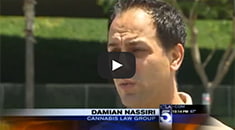
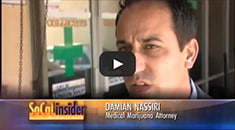
Damian Nassiri, prominent Riverside marijuana lawyer, says that cities can no longer ban marijuana collectives under the City of Lake Forest v. Evergreen Holistic case.

"Any fines or nuisance abatement lawsuit brought by these cities should no longer be tolerated by the collectives," Nassiri said. "It's time to fight back, because this appellate case helps collectives and is currently the law in California. It must be followed by the lower courts and judges should rule against cities that try and shut collectives down with unlawful bans."

A state supreme court decision is pending that will ultimately decide the issue of cities v. dispensaries. What's important to remember in all of this was that the voters declared their clear intent with the passage of the law in 1996 that allowed marijuana possession, sale and use for medicinal purposes. This right continues to be trampled on.

The details of the Murietta case look something like a crazy ping-pong battle.

The dispensary opened in the summer of last year, despite a city ordinance that banned its operation. It was shuttered just two weeks later after city officials secured a temporary injunction against it. But then an appeals court removed that injunction in the fall, and the collective re-opened - only to be shut down two weeks after that. Now, the court has ruled the dispensary can re-open, it just has to be in a different place.

Unfortunately, the issue is not likely to stop there - in Murietta or anywhere else in California. Murietta is also involved in a lawsuit with the Greenhouse Cannabis Club under similar circumstances. In that case, officers with the Murrieta Police Department are even accused of going so far as to put a tracking device on a volunteer patient as part of its enforcement of the ban.

Attorneys for the city say this legal wrangling isn't likely to end before the state's supreme court takes on the issue.

Until then, collectives need to know that there is legal help available, and that they shouldn't be bullied into thinking they have no options or recourse.

Continue reading "Riverside Marijuana Lawyers: Cities Can't Ban Pot Collectives " »

March 5, 2012

Medical Marijuana in Mendocino County Overruled by Feds

Medical marijuana in California and 15 other states and the District of Columbia has been legalized. In more than half of these areas, government officials have been launching new medical laws that could lands these people involved in the industry with criminal charges and stiff fines.
1369327_some_dutch_green.jpg
Back in 1996, California was the first state in the country to make marijuana legal for various medical uses. It has recently come under some serious scrutiny from federal officials. Our laws remain the most liberal, to some, in the country, allowing doctors to hand out medical marijuana recommendations for a variety of conditions. One that same hand, officials have been granted broad discretion and little ways to implement it. Mendocino County thought they had found an effective way, until the feds stepped in.

Our Southern California medical marijuana attorneys understand the fight against unreasonable medical marijuana regulations is far from over. The state law conflicts with federal law. The federal government rules that marijuana is still an illegal substance with absolutely no health benefits. Still, state law allows dispensaries.

After years, residents in Mendocino County thought that they had come to peace with absurd medical marijuana regulations and enforcements. Two years ago, the sheriff made an agreement to stop raiding those who produce medical marijuana as long as they paid to have their collections inspected.

This payment was a $1,500 fee and was used to keep growers in compliance with rules regarding distance from neighbors, odor control, water usage and the limitations stating that growers could only grow 99 plants on five acres of land, according to the Huff Post.

This program, requiring growers to pay the fee, earned the sheriff's department more than $663,000. Other jurisdictions quickly inquired about creating their own similar program after seeing its success.

The program's under scrutiny now. After crackdown efforts from the state's federal prosecutors, the board of supervisors put an end to Mendocino County's experiment. The program was halted after the U.S. attorney for Northern California threatened take the county to court for helping residents to produce a drug that was illegal under federal law, but still legal under state law.

"We thought we had something that was working and was making our life easier so we could turn our attention to other pressing matters," Supervisor John McCowen said.

McCowen thought that the city really was on to something. That is, until the feds stepped in.

Melinda Haag, Northern California's U.S. attorney, said that the County's licensing system doesn't meet federal standards. She says her and the other federal officials are just trying to push the federal laws banning this substance.

In recent crackdowns in Southern California, nearly 100 dispensaries have been shut down. Many of these dispensaries received threats from feds saying that they better close up shop or they could face criminal charges and fines.

Continue reading "Medical Marijuana in Mendocino County Overruled by Feds" »

February 26, 2012

Riverside Court Order Allows Medical Marijuana Collective to Remain Open

A Riverside Superior Court Judge recently signed an order at the request of the city of Murrieta to ban a medical marijuana collective, but the wording was ambiguous and will allow the business to remain open, the club's medical marijuana attorney says.

Riverside medical marijuana collectives have come under fire, as city, county and federal authorities have tried to shut them down. However, in cases where there is an effort to shut down a business, there must be legal representation.
file451297827287.jpg
An experienced Los Angeles medical marijuana attorney must be consulted during times like these. Residents involved in medical marijuana in California -- whether users, dispensary owners or cooperative or collective workers -- have rights. These rights must be protected.

In this case, the city of Murrieta, which is south of Riverside, requested an order against a medical marijuana collective that has only been open since January. The judge in this case agreed to issue an order, though the wording was left open to interpretation.

The judge wrote the club was to "immediately cease providing medical marijuana to more than two persons (at the club). The order also instructed the collective not to prevent city leaders from inspecting the premises.

The collective's Los Angeles medical marijuana lawyers believe this wording allows the collective to stay open, simply serving one client at a time. The collective's attorney told the North County Times that he is instructing the collective simply to schedule one client at a time so it can stay open.

While at first glance it may seem like a victory for the city, the wording allows for the collective to stay open, albeit with restrictions. While that may end up hurting business some, it still allows the collective to stay open and continue serving patients.

The order came after several court hearings. The first was in January, during which the city's legal team attempted to shut the club down altogether. The most recent court hearing was scheduled so that the city could make a second run at attempting to change the wording of a potential order.

City leaders acknowledged that the "more than two persons" clause in the order was the city's attempt to comply with state law while still enforcing the city's current moratorium on marijuana dispensaries.

What this may do is allow more dispensaries and collectives to open in Murrieta. While the city will attempt to shut them down, this order sets precedent that as long as only one patient is seen at a time, they can remain open. It will be interesting to see if other cities throughout Riverside County face challenges based on this court order.

While there has been a lot of backlash lately in the medical marijuana world, not everyone is against patients and businesses. Many people, such as Los Angeles medical marijuana lawyers, recognize the medical value these businesses bring and they are working to uphold these people's rights.

Continue reading "Riverside Court Order Allows Medical Marijuana Collective to Remain Open" »

February 20, 2012

Riverside Asks Feds For Help Enforcing Medical Marijuana Laws

More bad news out of Riverside.

As we previously reported on our Marijuana Lawyer Blog, a case out of Riverside will go to the California Supreme Court to determine if cities and counties can legally ban medical marijuana dispensaries.

Now, as if that wasn't enough of an assault on the medical marijuana industry, The Press-Enterprise is reporting that city leaders have reached out to federal authorities to help enforce medical marijuana restrictions there.
1156821_handcuffs.jpg
Medical marijuana in Riverside is a hotbed of controversy, much like in other places throughout the state. Despite voters making it known that they wanted medical marijuana to be an option as pain medication in 1996, cities and counties have decided to try to go against the will of the people.

Our Riverside medical marijuana lawyers have been able to represent many Riverside medical marijuana dispensaries, collectives and patients who have been caught up in this political nightmare. All of these groups have rights under state law that must be upheld.

In Riverside, as if the mounting pressure from the federal government wasn't already enough, city leaders have decided to specifically asked federal prosecutors to enforce the government's marijuana ban in their city.

In Riverside, medical marijuana dispensaries have been forbidden by local zoning laws.
Since 2010, the city has sought to shut down businesses by filing civil lawsuits against them. The city brags they have shut down about 30 small businesses this way.

Even though medical marijuana is legal under California law, city leaders have decided they don't want to help patients who may require this medication to help stop the pain from debilitating illnesses. The major conflict comes with federal law, which states that all marijuana is illegal.

Local dispensaries have been shut down in recent weeks and prosecutors have sent out warning letters in an attempt to intimidate businesses. Federal authorities have said they will file civil or criminal actions against operators as well as landlords who provide office space.

City leaders have decided they want this to happen in Riverside. Despite a court case that is still pending that determines whether any of this action is legal or not, they are trying to rid the city of these businesses before the court case is decided. Using misstated facts, the city attorney and police chief told federal prosecutors that the businesses are for profit and attract crime. I guess they must want every convenience store or late-night business shut down as well.

City leaders are begging for federal help because federal authorities carry certain authority, such as seizing assets, that local law enforcement cannot do. The crackdown on legally operating medical marijuana dispensaries is causing patients to seek illegal sources for their medication.

In essence, while law enforcement agents believe they are stopping crime by involving the government and shutting down these businesses, they are actually encouraging crime. Medical marijuana patients have chosen this form of medication because it's often less expensive and has fewer side effects. But authorities continue trying to stop this industry from thriving for no justifiable reason.

Continue reading "Riverside Asks Feds For Help Enforcing Medical Marijuana Laws" »

January 28, 2012

Obama Wages War on Los Angeles Medical Marijuana Industry

As our Los Angeles medical marijuana lawyers have said from the beginning, the recent explosion of interest by federal prosecutors in California's medical marijuana industry has to be a political issue.

Most medical marijuana dispensaries in Los Angeles are operating legitimately and following the law. And despite the perception that local political leaders and law enforcement officials try to spread on the public, these business aren't trying to avoid regulation.
mtRG10q.jpg
In fact, because of recent efforts by cities and counties throughout California to shut down the medical marijuana dispensary industry, rogue dispensaries are opening up, not paying local permit fees and can undercut prices as a result. It's bad for business and it gives all legitimate businesses a bad name.

And along with that kind of bad publicity, federal prosecutors have used their power of intimidation in recent months to threaten medical marijuana users and businesses into shutting down. The pressure has gotten to landlords, who have kicked out legitimate businesses based on threats of civil or criminal prosecution by the feds.

Local leaders, not wanting any problems with the federal government, have bowed down to the pressure as well, agreeing to suspend permitting practices and ban new dispensaries in their cities or counties until court cases that are still up in the air are settled.

Counter Punch, a political web site, recently wrote about the battle between President Barack Obama and the medical marijuana industry. The author writes that the recent pressure directed from federal prosecutors is part of a "shock and awe' campaign from the president, who is gearing up for a re-election campaign.

The article is critical of California's medical marijuana industry, writing that the problem is that there isn't enough regulation, which has brought out loopholes and court case challenges that has caused mayhem in the industry.

The author writes that criticism that California's laws are too broad, such that he obtained a medical marijuana card outside a medical marijuana festival without showing any medical history to a physician, though he admits he has had cancer and has been treated with chemotherapy. His partner, with no serious illness history, also has a card.

The author, a lawyer and supporter of marijuana for recreational or medicinal use, states that nearly one million people are arrested and prosecuted for marijuana use or possession each year. He argues that the drug should be made legal so that the country doesn't have to have this debate in the first place.

But he warns supporters of the medical marijuana industry not to be upset about what's going on because the system has been played by many people -- "patients" getting medical marijuana cards without real proof and rogue dispensaries opening up shop without permission. This was bound to make the government suspicious and bring on unwanted scrutiny.

The author does make some points and those are the same points medical marijuana supporters are trying to make today. Many want regulation. The more legitimate the industry is, the less critics and disruption there likely is to be. Prescription pain medication has become more of an issue than medical marijuana, yet that industry is not facing the same scrutiny.

Continue reading "Obama Wages War on Los Angeles Medical Marijuana Industry" »

December 19, 2011

Medical Marijuana Dispensaries In Riverside County Require Legal Representation

The hits just keep coming for hard-working medical marijuana dispensaries in California, especially those in Riverside County where authorities have announced they are going to try to shut them down, The Desert Sun is reporting.

Ever since California voters agreed to legalize marijuana some 15 years ago, it has been a constant struggle. In recent months, federal authorities have cracked down, forcing a political agenda on the many companies that have operated -- legally -- under California law. But that pressure has created problems on a local level. Many timid local officials have succumbed to federal pressure and begun going after these businesses, too.
407664_vancouver_hemp_rally_1_jpg.jpg
Our California medical marijuana lawyers are well-versed in the controversy going on not only in Riverside County, but also in other communities throughout California. We are willing and able to represent these businesses who are hard-working and who are just trying to run their companies.

The Desert Sun reports that the Riverside County Board of Supervisors has given its attorneys permission to sue pot shops in the unincorporated county as well as property owners who allow them to operate. The only alternative, county officials say, is for the shops to close down.

The county passed ordinances banning medical marijuana dispensaries in 2006, the newspaper reports, though officials last year considered an ordinance last year that would allow for a regulated form of dispensaries. They later decided to uphold the ban and keep it in place.

County officials, though, estimate that about 50 medical marijuana dispensaries popped up last year in the county's unincorporated areas in response to the demand of its residents who legally have cards to purchase marijuana for medical use. These residents typically have various forms of cancer or other ailments that require marijuana for medicinal purposes.

County attorneys told the newspaper in 2010 that the reason some dispensaries were operating was because of "vaguely written laws" by state lawmakers that have allowed them to operate.

A majority of voters made it pretty clear that they supported legalizing marijuana for medicinal purposes -- that wasn't vague at all. And even though state law allows for these small businesses to operate, they conflict with federal drug laws, which is why there is an ongoing conflict.

Federal authorities, in an effort to garner political favor apparently, have made it a point in the last year to say they would prosecute businesses and the people who rent to them. That is a powerful threat and has led to hundreds of dispensaries shutting down or not registering with the counties or cities where they are operating for fear of being shut down.

Our medical marijuana lawyers are prepared to take up the fight on behalf of these small business owners and the patients they serve. They serve an important function in our communities and must be well-represented in their fight against the government.

Continue reading "Medical Marijuana Dispensaries In Riverside County Require Legal Representation" »

December 13, 2011

California Marijuana Growers Shifting Production Tactics, Testimony Reveals

A recent article out of Washington reports that California's marijuana growers have shifted plots from national forests to farmland, according to the Fresno County sheriff, who testified to the Senate Caucus on International Narcotics Control.

Admittedly, medical marijuana in California is a difficult industry because while many small businesses sell marijuana solely for medicinal purposes, others use it for illegal uses. Illegally operating growers sometimes make shipments to legal dispensaries and then ship out of state to illegal users and distributors.
n27oKzA.jpg
This is why our Riverside medical marijuana lawyers have been so busy helping people throughout California who have faced problems simply for following California's laws, which were originally put into place more than 15 years ago.

Whether it is law enforcement interference, or problems from federal authorities who don't respect California's laws, or the reaction of local officials scared of both groups, these small business owners have been under the gun in 2011. Our marijuana lawyers hope that things simmer down in 2012.

According to the news article, Fresno County has seen a drop in marijuana plots on public land. In 2009, law enforcement identified 81 sites where marijuana was grown on public lands in Fresno County. In 2010, that number dropped to 19 and down to 8 in 2011.

Senators said that the Central Valley is perfect farmland for marijuana because of abundant sunlight, fertilizer and irrigation. While senators were encouraged that marijuana isn't being grown on public land, the shift has been to private farmland, the article states.

Last year, Fresno's sheriff told senators that 36 multi-acre marijuana cultivation sites were found on conventional farmland throughout Fresno County. One site found this year by officials was 57 acres.

Officials are also alleging that illegal immigrants are being used on these sites and have been particularly important in the marijuana industry in California. In July, officials arrested 159 people in sweeps through five Northern California counties. About 95 percent of those who were arrested were illegal immigrants. Between 2005 and 2010, 1,437 of the 2,334 marijuana sites seized on federal forest land had illegal immigrants on them.

In that July sweep, more than 632,000 marijuana plants were seized, along with 38 weapons, including assault rifles. During a similar operation in 2010, 432,271 marijuana plants and 33 weapons were seized around Fresno.

Officials believe that the marijuana industry has given Mexican drug trafficking gangs a cover for their operations. And this hurts legitimate businesses. With law enforcement snooping and federal authorities bringing pressure, people who are trying to run dispensaries the right way can unneeded pressures.

If people are illegally operating marijuana farms and illegally distributing it to non-authorized users, it paints all businesses in a bad light. This increases prices, leads to shut downs in businesses and, ultimately, hurts patients.

Continue reading "California Marijuana Growers Shifting Production Tactics, Testimony Reveals" »

November 17, 2011

Local Governments Lose Funding in Fights against Medical Marijuana in Garden Grove and Elsewhere

Medical marijuana dispensaries in Garden Grove were banned roughly three years ago, but the ban didn't go as planned. With a number of lawsuits that began stacking up, officials worried that the city would not have the necessary funds available to pay any costs associated with the laws, including attorneys' fees. One marijuana case paid out roughly $200,000 to the attorneys. Since the flood of these lawsuits, the city stopped pushing its ban. Beginning this past summer, the city required medical marijuana dispensaries to register with the city. Now there are roughly 60 shops in the city. City Manager Matt Fertal says that he thinks the city has more shops per capita than any other city in the state.
mfXjRRi.jpg
"Everybody is just so frustrated with this," Fertal said.

Our Los Angeles medical marijuana attorneys understand the problems shop owners face when dealing with the government regulations on the medical marijuana industry. State law doesn't specify how cities and counties should regulate the industry and federal government says it's still illegal, not matter what. Fertal recognizes that many dispensaries won't hesitate to sue cities for trying to regulate them. Garden Grove continues to search for a comprehensive regulating system to please everyone.

As the industry continues to grow, smaller cities are finding regulation to be too costly. Many smaller cities aren't fortunate enough to have in-house legal departments and have to pay attorneys by the hour.

While there are no distinct numbers illustrating how many local governments have been involved in costly litigation over marijuana, many estimate that there have been at least 40. Some believe this number is much higher.

Many cities are undergoing serious budget crunches and simply don't have the resources to battle these wealthy dispensaries. Medical marijuana activists have joined the fight, too, saying these needless regulations are harming deserving patients who rely on the treatment.

Officials who suppress the industry are going to become victims of litigation, it's inevitable. There are activists in nearly every community throughout the state who are ready to fight back. These activists say they have the state on their side. Recent polls illustrate that a majority of Californians support medical marijuana.

Medical marijuana was approved for medicinal purposes in California back in 1996. This was passed in Proposition 215. Later in 2009, California's legislature passed the Medical Marijuana Program Act (Senate Bill 420). The legality of the industry remains in the gray area though with so many different regulations across the state. In the beginning of President Barack Obama's term, he promised to halt the crackdown on medical marijuana that followed state laws. That promise was short-lived.

"People should be entitled to know what the law is, and the law is not clear enough for people to know what it is," said Joe Elford, of Americans for Safe Access.

Continue reading "Local Governments Lose Funding in Fights against Medical Marijuana in Garden Grove and Elsewhere" »

November 15, 2011

Medical Marijuana Dispensary Ban Upheld in Riverside; the Fight Continues

A recent move by the state appellate court upheld the citywide ban on medical marijuana dispensaries in Riverside, according to The Press-Enterprise. The court believed that there was nothing listed in Legislature's Medical Marijuana Program or in California's Compassionate Use Act, or Proposition 215, which was passed back in 1996, specifically stated that government wasn't able to ban these facilities.
403_dutch_weed.jpg
The fight continues. Those in power don't like it when voters take the law into their own hands. Medical marijuana rights were conferred by a vote of the people. Our marijuana dispensary advocates do not believe bureaucrats have any right to infringe upon those rights. But that doesn't mean it's not going to be a fight.

"The CUA and the MMP do not provide individuals with inalienable rights to establish, operate or use (medical marijuana dispensaries)." said Associate Justice Carol Codrington. He adds that state statutes don't stop local governments from setting regulation of medical marijuana dispensaries through their own zoning ordinances.

Our Orange County medical marijuana lawyers understand that there are other dispensaries in the area, 15 to be exact, which will be receiving notices from the city asking them to voluntarily shut their doors. If these dispensaries don't close up shop, city officials say that it will issue court orders to have them closed down.

A City Attorney for Riverside, Greg Priamos, says that the City Council and the city both have the right to determine what appropriate uses for land may be. Thus, he believes that the city has the right to shut down any business it desires.

This opinion has already been published; the Fourth District covers the appellate jurisdiction of San Bernardino, Inyo and Riverside Counties.

The case had already been heard in front of a three judges earlier this month.

These three judges were the deciding factor in this continuance of this complete ban and of the San Bernardino County's total ban.

G3 Holistic Inc., the Wellness Center Inc. for Riverside and Inland Empire Patient's Health were the defendants in the case. In Upland, these companies and other medical marijuana advocates can create a petition and submit it to the state Supreme Court to get it to review their decisions.

Lanny Swerdlow, who is the founder of the Riverside medical marijuana dispensary in question in the case, says he's planning on appealing this decision. He says they he will be keeping the collective open until the courts require him to shut down. He adds that he is extremely disappointed that the city and the court do not recolonize the needs of his patients and their rights to form collectives.

Many believe that these recent decisions regarding local dispensaries are partially a fault of the federal government. In recent news, the federal government has announced that it will be conducting a nationwide crackdown on the medical marijuana industry. Many parties within the industry are fighting back and are filing suits against the crackdown in an attempt to protect both their company's rights and the rights of patients.

Continue reading "Medical Marijuana Dispensary Ban Upheld in Riverside; the Fight Continues" »

September 16, 2011

Riverside Medical Marijuana Attorneys Watching Inland Empire Case

The tentative opinion of the Fourth District Court of Appeals in the case of the City of Riverside v. Inland Empire Patients Health and Wellness is unfortunately not favoring the Riverside medical marijuana dispensary.

The dispensary appealed a trial court finding, which upheld the city's right to shut down the dispensary after declaring it a public nuisance. The case is one of a handful being watched by medical marijuana dispensary attorneys in Riverside and elsewhere in Southern California. 952313_gavel.jpg

As we reported recently on our Marijuana Lawyer Blog, dispensaries must continue to stand and fight against the local, state and federal interests that continue to infringe upon the rights of medical marijuana patients and collectives granted by voters in 1996.

Inland Empire Center is contending Riverside's ban on medical marijuana dispensaries is preempted by state law -- including the Compassionate Use Act of 1996 and the Medical Marijuana Program.

The court's tentative opinion sides with the city.

Inland Empire Center opened in Riverside in 2009. The city sued the dispensary operators and the landlords. The city sent a letter claiming code violations before filing suit. The trial court granted the city a preliminary injunction in November 2010.

The appeals court was asked to overturn the injunction on the grounds that the trial court abused its discretion. The court said at issue is whether Riverside's zoning rule is valid and enforceable. And whether the dispensary met its legal burden to show state law preempts the local ordinance, which it has failed to do in the case, according to the tentative opinion.

Also at issue in this case is the city's contention that a clinic next door was involved with the medical marijuana dispensary. Both were owned and/or operated by the same people. Doctors are not permitted to refer to clinics, which may also be a non-profit violation.

Oral hearings in the case are pending.

Continue reading "Riverside Medical Marijuana Attorneys Watching Inland Empire Case " »

September 2, 2011

Medical Marijuana Dispensaries in Los Angeles Regulated by City Government under AB1300

Last week, Governor Jerry Brown signed a bill that allows all local governments to regulate the locations of medical marijuana dispensaries in California. The bill, AB 1300, was first introduced by Assemblyman Bob Blumenfield (D-Woodland Hills). It was also supported by the Los Angeles city attorney, according to NBC.

This law aims to settle the issue; pot shops continue to sue local government over location regulations. Under this new law, cities throughout California will have the ability to file criminal or civil charges against shops that violate the new regulations.
mgF5byc.jpg
Our Orange County medical marijuana attorneys will continue to fight these rules and regulations. A court ruling has already sided with patients and collectives on the issue of criminal charges -- ruling patients and collectives should not face criminal prosecution for something that is legal under state law.

State and local governments continue to have a difficult time understanding the obligation to obey the state Constitution. The state's marijuana law was passed by the voters. Our attorneys do not believe state or local government has the right to construct rules or regulations that infringe upon the voter-approved rights of patients. As is usual with state government, too many of the politicians have forgotten that they work for the voters.

The governor also received SB 847 to further regulate the medical marijuana industry. This bill aims to stop medical marijuana shops from opening up within 600 feet of homes and residential areas. Although this bill has yet to be signed, it's another real threat to the livelihood of the industry. A number of residents in local residential areas rely on the convenient location of these shops to receive their prescribed medication. Limiting their operational areas will put dispensaries out of reach for many deserving patients.

"The new law will provide a framework for stability after years of struggling with a Wild West, lawless proliferation of dispensaries across California that sometimes constitute a public nuisance or worse," Blumenfield said.

The governor has 12 days to decide on that SB 847, which was introduced by state Sen. Lou Correa (D-Santa Ana).

A number of our medical marijuana dispensaries believe that the new law will only lead to a repeat of historic regulations. Take Los Angeles for example. Back in 2010, the Los Angeles City Council and Los Angeles Mayor Antonio Villaraigosa passed and signed an ordinance that required medical marijuana dispensaries to:

-Only provide medical marijuana patients that "participate in the collective cultivation of marijuana at or upon the location of that collective."

-Keep their businesses at least 1,000 feet away from all schools, libraries, child care facilities, parks, religions institutions, substance abuse rehabilitation centers, youth center and any other medical marijuana collective.

-Close shops from 8:00 p.m. to 10:00 a.m.

-Operate as a not-for-profit establishment. The only compensation it would be allowed to collect would be to cover expenses for cultivating, growing and providing the products.

It was these requirements, along with a limit on the number of dispensaries, that lead to hundreds of closed shops in the city.

A number of dispensaries have been shut down since the new law was signed, but companies are fighting back. Five dispensaries have already been shut down in Westwood, California. More are expected to be forced to close up shop.

The bottom line is that medical marijuana is a lucrative industry and should be regulated as a legitimate business in the U.S. But unnecessary regulations that put these companies out of business are only violating owners and patient's rights.

Continue reading "Medical Marijuana Dispensaries in Los Angeles Regulated by City Government under AB1300" »

August 28, 2011

Medical Marijuana in Riverside not Suffering Alone -- Detroit Industry Faces Harsh Crackdowns

Retail dispensaries in Michigan took a hard hit late last month after a state appeals court concluded that their operations were illegal and they were to shut down immediately, according to the Detroit Free Press. Retail dispensaries make up a large part of the state's thriving medical marijuana economy. This shut down is going to affect more than these dispensaries. It's going to greatly affect growers who distribute to these companies.
673517_flowerpot_4.jpg
Medical marijuana in Riverside and elsewhere throughout the state of California has been through these same problems time and time again. Government officials enact regulations and bans on specific sectors and the affect is widespread throughout the medical marijuana industry. Each ban and regulation inadvertently affects you, the consumer. Although government officials contend regulations are for the betterment of the community, nothing can benefit a community better that a legitimate industry that can offer it's funds, products, services and tax dollars.

Our medical marijuana attorneys in Los Angeles understand that patients in Michigan are facing some of the same problems as patients here in California. Since medical marijuana dispensaries in Michigan will be required to shut down, Michigan's 100,000 registered marijuana patients will have to turn to their own gardening skills to produce their own medicine.

Since patients will be forced to grow their own, suppliers of medical marijuana plant supplies see this newly effective ban as a blessing in disguise. weGrow, a franchise based out of California, recently said that it will open a store in Michigan by the end of the year. This store is expected to be about 10,000 sq. ft. It will help patients produce their own medicine since they'll no longer be able to purchase their products at local dispensaries.

Dhar Mann, the founder of weGrow, says that the company currently has stores in Phoenix and Sacramento. He is currently looking to open a spot in the Detroit metro area as well. The negotiations with the franchise aren't finalized, but he is confident that the Detroit location will be open by 2012.

weGrow exclusively caters to growers of medical marijuana. weGrow not only offers growing supplies, but also offers training seminars and growing advice. Medical marijuana patients can even become certified through the company. The Michigan store is expected to provide customers with an in-house physician as well.

Medical marijuana was legalized by state voters back in 2008. Since then, there has been a growing demand for indoor supplies. This demand has boosted demand for supplies from companies that have been in the area, and created a demand for newer stores.

Currently, a majority of the state's medical marijuana is grown indoors. This is because law states that it has to be grown in a secure location where the crop can only be accessed by either a certified caregiver or a medical marijuana patient.

Regulations on the medical marijuana industry continue to burden suffering patients and continue to hinder a struggling economy. Without treating this industry as a legitimate business, everyone will continue to suffer.

Continue reading "Medical Marijuana in Riverside not Suffering Alone -- Detroit Industry Faces Harsh Crackdowns" »

August 9, 2011

Shop Providing Medical Marijuana in North Hollywood Shut Down by City Officials

The Los Angeles city attorney's office recently obtained a court order to shut down operations at a medical marijuana dispensary in North Hollywood. Under the shutdown, the owner of the company was ordered to pay more than $35,000 in attorneys' fees and costs earlier this week, according to the Studio City Patch.
429469_canabis_indica.jpg
During the eviction process, the owners of shop Starbudz Inc. were carried off the premises in the NoHo Arts District. Sheriff's deputies cleared the area for the Los Angeles police to come in and seize the remaining property. The police officers confiscated 3.5 kilograms of marijuana, 37 plants and food items. Officers also took a 3-foot long iguana into custody.

Our Orange County medical marijuana attorneys would like to point out that this eviction action was the result of a number of alleged community complaints. No data has been released regarding these complaints. The city reportedly collected a significant amount of evidence through undercover marijuana purchases that were made at that location as well. The city also collected evidence after raiding the building through a search warrant executed by the Los Angeles Police Department.

Frank Mateljan of the city attorney's office says that the city attorney's notified the shop owners and the property owner back in January of "narcotics violations at the property."

The shop neglected to file a Notice of Intent to Register under the city's "temporary urgency" ordinance, a temporary law governing medical marijuana sales.

Back in March, the city attorney's office filed an unlawful detainer action against the owners of this shop. The detainer was filed in an attempt to evict the shop and for the owners to forfeit the lease because the property owner had reportedly failed to take action to evict the shop.

A summary judgment was granted by the court in favor of the city back on June 17th. Through this judgment, the company owner was ordered by the court to pay $35,290 to the city for attorneys' fees and costs. Two days later, the county Sheriff's Department handed Starbudz and the property owner, Vineland Sunshine Properties, with a notice of lockout. The order was enforced and carried out that Wednesday.

Medical marijuana clinics in Hollywood are currently required to be staffed with the same type of expert medical doctors that you would find at any other healthcare practice. The only difference is that these health specialists deal specifically with evaluating patients who are suffering from symptoms that can be treated with the use of medical marijuana. Researchers have found that the drug is able to treat more than 100 different illnesses, diseases and chronic symptoms. All of these conditions have been approved by the state to be treated with the use of medical marijuana. If doctors believe that a patient can benefit from this treatment, they are then prescribed the drug and presented with a medical marijuana card.

According to the Medical Marijuana Program, there have been more than 55,000 medical marijuana cards issued in the state of California since 2004.

Alameda, Alpine, Amador, Butte, Calaveras, Contra Costa, Del Norte, El Dorado, Fresno,
Glenn, Humboldt, Imperial, Inyo, Kern, Kings, Lake, Lassen, Los Angeles, Madera, Marin,
Mariposa, Mendocino, Merced, Modoc, Mono, Monterey, Napa, Nevada, Orange, Placer,
Plumas, Riverside, Sacramento, San Benito, San Bernardino, San Diego, San Francisco, San Joaquin, San Luis Obispo, San Mateo, Santa Barbara, Santa Clara, Santa Cruz, Shasta, Sierra, Siskiyou, Solano, Sonoma, Stanislaus, Tehama, Trinity, Tulare, Tuolumne, Ventura, Yolo and Yuba counties currently participate in the program.

Continue reading "Shop Providing Medical Marijuana in North Hollywood Shut Down by City Officials" »

August 7, 2011

Medical Marijuana Dispensaries in San Bernardino Face Lengthy Compliance Process

Nearly 30 medical marijuana dispensaries in San Bernardino county have just a short time before they're shut down my county officials.

Back in May, a land-use regulation was enacted by county supervisors allowing Code Enforcement officials to begin their 13-step compliance process against 26 dispensaries. Under this compliance process, dispensaries will be handed increasingly higher fines the longer they keep their doors open for business.
866036_ir_hemp_leaf.jpg
Our San Bernardino medical marijuana lawyers understand that even as enforcement moves ahead, a couple of court rulings may limit the county's ability to close these dispensaries. It is only after the 13th step that the county can begin civil action to close any dispensary that is in noncompliance. Criminal penalties have been shot down by a recent court ruling. Those who stand in fight are most likely to be successful while those that fold and close could be forfeiting their future rights.

Conflicts between local ordinances, state laws and federal legislation remain unresolved, and the number of court rulings in favor of the dispensaries continues to grow.

As we've discussed before, the federal government recently decided to keep marijuana on the Schedule I list with heroin, cocaine and ecstasy. This is the most serious of all drug classifications under the federal Controlled Substances Act. The Compassionate Use Act was also passed to allow patients with a valid doctor's recommendation and their designated primary caregivers to both grow and possess marijuana for personal use.

Still, local governments make attempts to ban dispensaries.

The county's enforcement is being challenged by lawsuits. The current ordinance requires that residents of unincorporated areas can only grow their own supply indoors. Outdoor growth is prohibited.

Proposition 215 allows the existence of all storefront dispensaries, but local governments are tossing out this law and are continuing attempts to illegally shut them down.

"One sentence in AB 1300 says local jurisdictions have the ability to regulate these businesses," said Lawrence Bynum, a Riverside civil attorney. "I think that could open the door to banning them."

Of the 26 dispensaries that the county is targeting, nine of them have taken legal action against the county. The court hearings for most of those countersuits are scheduled for July and August.

Continue reading "Medical Marijuana Dispensaries in San Bernardino Face Lengthy Compliance Process" »

July 1, 2011

Medical Marijuana Dispensaries in Los Angeles and Elsewhere Rejected by Banks Everywhere

Operators and supporters of medical marijuana dispensaries in Los Angeles and elsewhere are having a difficult time doing business with their local banks. A number of banks have turned away these companies because they risk falling afoul of anti-money-laundering and drug-trafficking laws, according to International Business Times.
mhGx3Re.jpg
The co-owner of Denver-based dispensary Alpine Herbal Wellness, Sue Harank, says that a number of her accounts have been closed at two separate banks and at credit union. Her shop has been open for business since March of 2010.

Our Los Angeles medical marijuana attorneys understand that owners and operators of these medical marijuana dispensaries have faced a number of obstacles and regulations from both the state and federal government. Now, with banks turning away their business, they're forced to jump through even more hoops to provide their services to patients that rely on them for treatments.

"Both banks and the credit union pursued our business initially and said they had talked to the corporate office and run it through legal, but a month or two later they all reversed themselves," said Harank.

The largest bank in the United States, Bank of America Corp, said that they started to withdraw their services from dispensaries after they received a warning from the U.S. Drug Enforcement Administration in late 2007 or early 2008.

Marijuana dispensaries in states that have legalized medical pot are all having a tough time getting assistance from banks and credit card companies. This issue will continue as federal authorities declare the medical marijuana business illegal.

It's not just banks that are closing their doors on dispensaries. Credit card companies are also refusing service to the industry, even in states where medical marijuana is legal. These financial institutions report to just be operating in compliance with federal authority orders.

This pot business is estimated at $1.7 billion annually. In our state alone, the medical pot market size is estimated to be more than $1 billion.

"People have gotten their credit card accounts shut down without them even knowing it," Harank says.

It's not just operators in California that are experiencing this discrimination. A number of dispensary owners in various states, where marijuana has been legalized, have been hit by account shutdowns from a number of banks.

"They just summarily close accounts. Banks are very unsure if it's OK to do business with medical cannabis organizations. It ripples out to credit card and merchant services accounts," says Don Duncan, California director of the advocacy group Americans for Safe Access and a member of the board of the medical marijuana collective Los Angeles Patients and Caregivers Group in West Hollywood.

Continue reading "Medical Marijuana Dispensaries in Los Angeles and Elsewhere Rejected by Banks Everywhere" »